Game IP: Cultural Mythos vs Continuity
Can games escape the cage of continuity?
I. The Mythos We Grew Up With
When I was a kid, Batman was one of my favorite characters. During the summers, before I’d ride my bike to sports camp at the park, I’d watch Adam West in reruns — bright colors, campy villains, the whole thing. That was my Batman.
Then I got older, and it blew my mind when the Darkman, Michael Keaton, pulled off the character in Tim Burton’s Batman. Then came the animated series, Christopher Nolan’s Batman, Snyder’s Ben Affleck Batman, and Matt Reeves’ Batman.
None of them were my introduction to the character — Adam West was — but they didn’t have to be.
They were still Batman.
That’s the power of mythos: multiple interpretations, one identity.
Film understands this instinctively.
Games, almost universally, do not.
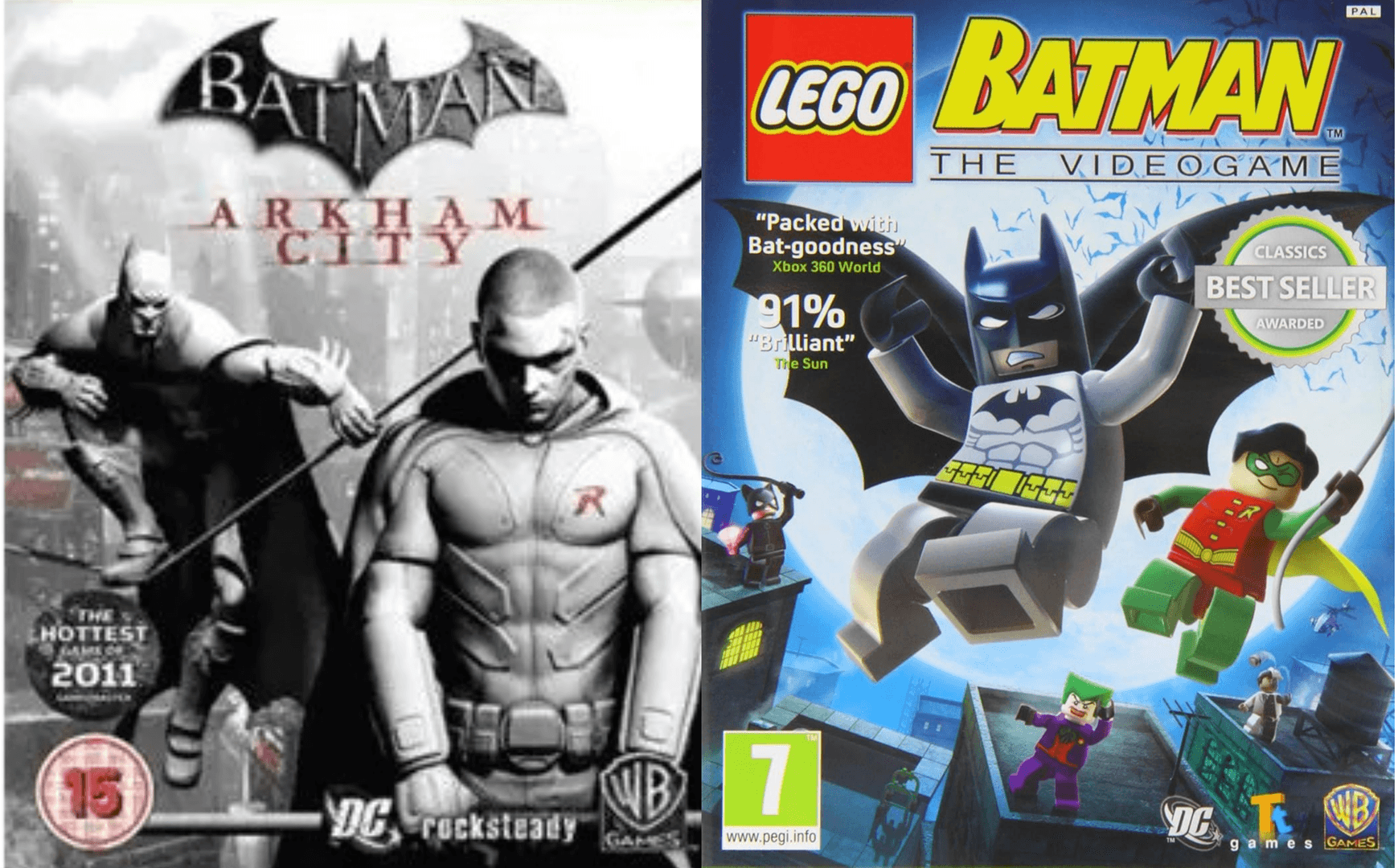
Mythos thrives through reinterpretation. Canonical continuity restricts it.
II. Film Treats IP as Mythos
Film treats iconic characters as cultural artifacts, not continuity chains. Batman isn’t one story — he’s a myth interpreted by different creators across decades.
Burton → gothic surrealism
Nolan → grounded realism
Snyder → operatic myth
Reeves → detective noir
Animated → mythic modernism
LEGO → comedic deconstruction
Arkham → kinetic action
None of these versions invalidate the others.
None of them “replace” the others.
None of them are “the real one.”
They’re all Batman.
This is how myth survives: reinterpretation.
This is how culture stays alive: new voices, new angles, new aesthetics.
Games don’t have this cultural flexibility — and the reason is structural.
III. Games Treat IP as Continuity — Because of the Industry’s Structure
Gaming has a structural quirk no other medium has: publishers marry studios. Once a studio creates an IP, that IP becomes permanently tied to them — creatively, tonally, and historically. It never moves. It never gets reinterpreted. It never finds a new creative home.
In film, a character can move freely between creators.
In games, an IP is locked to the studio that happened to make it first.
This is the root of the problem.
One studio owns the IP.
One tone becomes canon.
One interpretation becomes “the brand.”
Every sequel must match the last one.
Every creative decision is judged against history.
Halo, Gears, Zelda, God of War, Pokémon — all locked into single‑studio interpretations for decades.
Gaming treats IP as canonical continuity, not mythos. And canonical continuity can become a cage.
IV. The Cultural Cost of the Publisher × Studio Marriage
This structural marriage creates three major cultural losses.
1. Talented studios are sidelined
There are countless talented indie studios and veteran teams who never “struck gold” with an IP — not because they lack skill, but because they never had the chance.
They could reinterpret existing IP brilliantly.
They could expand mythos.
They could bring new cultural angles.
But the industry structure doesn’t allow it.
2. Publishers ignore the talent they already have
Large publishers — Xbox, EA, Sega, Take‑Two — have studios in‑house fully capable of reinterpreting their biggest IP.
But the marriage model prevents it.
Hangar 13 made two brilliant Mafia games.
They understand tone, atmosphere, narrative, and world‑building.
It’s lost money not allowing them to reinterpret Max Payne as something new — without erasing the opportunity for another studio to return to classic Max Payne later.
Continuity prevents opportunity.
Mythos enables it.
3. IP becomes trapped by its own history
When only one studio can touch an IP, the IP becomes creatively frozen.
It can’t evolve.
It can’t shift tone.
It can’t explore new genres.
It can’t grow culturally.
It becomes a product line instead of a cultural artifact.
V. The Pipeline Problem: Why Reinterpretation Is Nearly Impossible Today
Even if publishers wanted to treat IP like mythos, the current game development pipeline makes reinterpretation structurally difficult.
Game development is slow, expensive, and opaque.
And that opacity kills reinterpretation before it ever begins.
Prototyping takes too long
A studio can spend 12–18 months building a prototype that leadership can actually evaluate.
Not a pitch deck.
Not a mood board.
Not a vertical slice.
A playable prototype.
By the time leadership sees the vision, millions have already been spent.
That’s not a pipeline built for experimentation.
That’s a pipeline built for risk aversion.
You can’t see the studio’s vision until it’s too late
In film, you can see a director’s tone, aesthetic, and angle almost immediately.
In games, you can’t see anything until:
- the engine is stable
- the tools are built
- the systems are functional
- the content pipeline is online
- the team has spent months making something playable
Only then does the publisher finally see the creative angle.
By that point, the project is already committed.
The final product often diverges from the prototype
Even when a prototype lands, the final game can be fundamentally different:
systems evolve
scope changes
engine constraints appear
production realities reshape the design
timelines force compromises
content pipelines dictate tone
This makes publishers even more hesitant to let new studios reinterpret IP.
They’re not just betting on the pitch — they’re betting on a multi‑year pipeline they can’t see.
This pipeline protects canonical continuity and punishes reinterpretation
The result is structural:
Canonical continuity is safe.
Reinterpretation is expensive.
New voices are risky.
Mythos is impossible.
The pipeline itself reinforces the Publisher × Studio marriage.
It keeps IP locked in place.
It prevents cultural reinvention.
This is the hidden reason gaming never adopted the mythos model.
VI. The Missing Creative Layer
The industry isn’t failing to reinterpret IP because it lacks imagination.
It’s failing because its tools make imagination too expensive.
The current pipeline forces studios to spend millions before anyone can even see the creative angle. Prototypes take too long. Vision arrives too late. And even when a prototype lands, the final game can drift so far from the original intent that publishers become even more risk‑averse.
Reinterpretation requires fast iteration.
It requires clarity.
It requires a way to see the game before the game exists.
This is the layer the industry has been missing.
I’ve spent years architecting Forge, a design-time architecture built specifically to solve this problem — an environment that lets studios express systems, levels, mechanics, and tone long before production begins. It is designed to remain runtime-agnostic, supporting pipelines into Unreal, idTech, Creation Engine, Unity, and other modern runtimes. It gives publishers a clear view of a studio’s vision early, cheaply, and accurately.
If the industry wants mythos — if it wants reinterpretation, reinvention, and cultural longevity — it needs tools that make experimentation affordable.
The pipeline won’t change on its own.
The tools have to change first.
VII. The Cultural Opportunity
Games don’t need more sequels.
Games need more reinterpretations.
The future of IP isn’t rigid continuity —
it’s mythos.
The publishers who understand this will build worlds that last decades, not franchises that burn out. They’ll create cultural artifacts, not product lines. They’ll build universes that can be reinterpreted, reinvented, and rediscovered by new generations — the way Batman has been for sixty years.
Mythos is the model.
Games are overdue for it.