Webb Systems Essay
Gaming Culture
Where gaming lived, where it went, and what comes next.
I.
When the Arcade Came Home
I remember when the purpose of a home console was obvious: bring the arcade home.
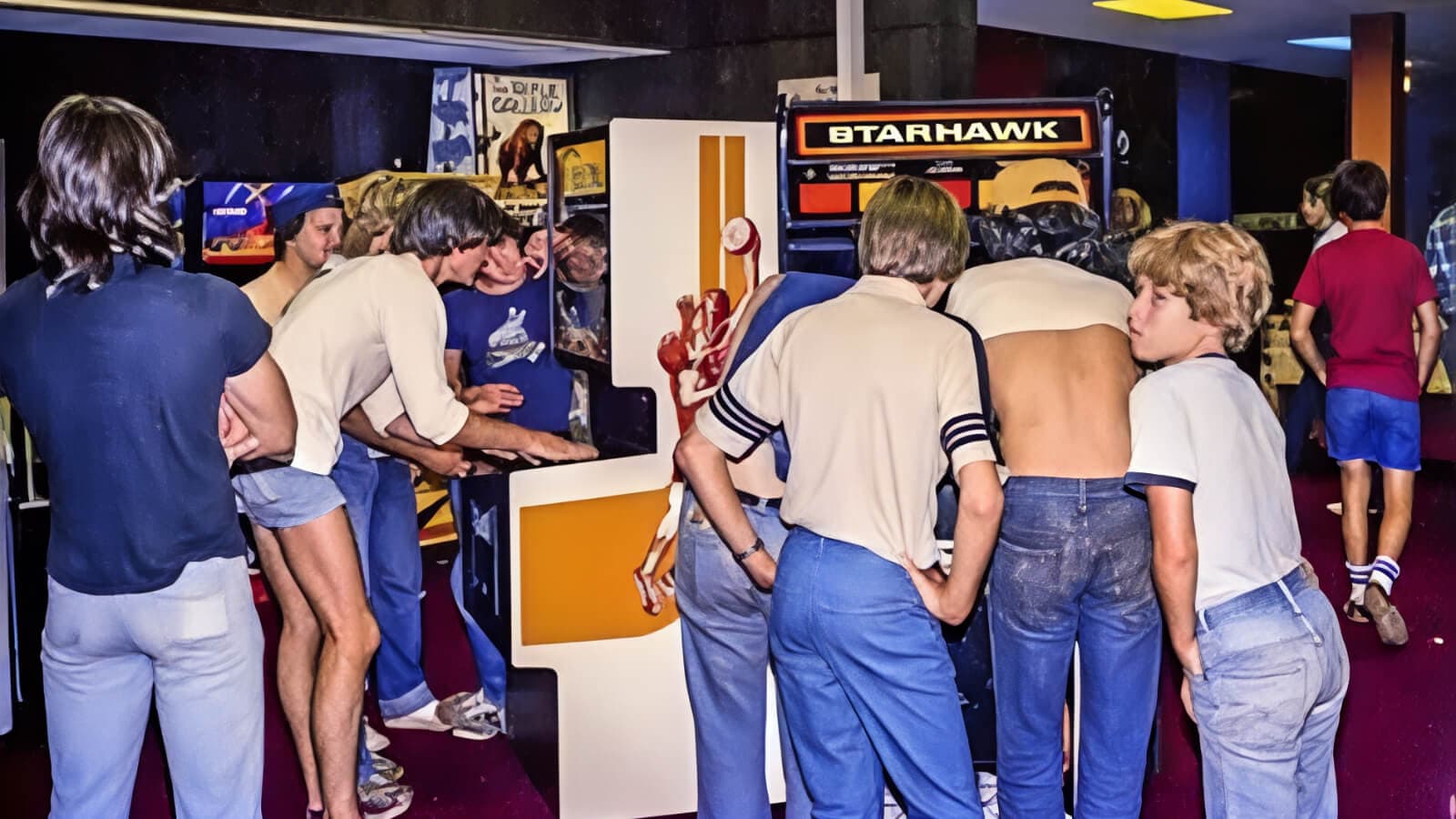
The earliest consoles were attempts to take something that existed somewhere else and put it in the living room. The arcade was where games lived. It was where you discovered them, watched other people play them, learned which games mattered, competed, developed reputations, and spent time around people who shared the same interest.
The console brought the game home, but the arcade had already established something larger than the game itself.
It had established gaming culture.
At the same time, computers were developing a different lineage.
Early PC games were not simply trying to reproduce the arcade. Text-based adventures, role-playing games, simulations, strategy games, and early computer interpretations of Dungeons & Dragons were exploring what happened when a game became more than an immediate test of reflexes. They introduced worlds, characters, statistics, inventories, systems, persistence, and increasingly complicated forms of player agency.
Games like Ultima demonstrated that the computer could become a place where a player inhabited a world rather than simply completed a challenge.
Console gaming evolved differently.
Nintendo understood something fundamental about the arcade experience: immediacy mattered. A game needed to communicate itself quickly. Movement needed to feel natural. Interaction needed to be legible. The player needed to understand why something was fun by playing it.
Miyamoto and Nintendo expanded the vocabulary of arcade design without abandoning its accessibility.
But eventually these traditions began to collide.
Console games became larger. They inherited worlds, progression systems, inventories, character development, exploration, narrative structures, multiplayer systems, and other ideas that had flourished on computers.
PC gaming remained culturally distinct, but consoles were no longer simply arcade machines connected to televisions.
They were becoming ecosystems.
What matters isn't the hardware. It's what changed between the hardware.
I lived through that transition.
Atari to ColecoVision.
NES to SNES to Nintendo 64 to GameCube.
Genesis to Saturn to Dreamcast.
PlayStation to PlayStation 5.
Xbox to Xbox Series.
Arcades to LAN centers to online multiplayer to the living room.
Looking backward, what matters to me isn't the hardware.
It's what changed between the hardware.
I watched progression change.
I watched player identity change.
I watched multiplayer change.
I watched discovery change.
I watched gaming communities change.
And eventually I watched the relationship between the game and the platform change.
Those transitions created lineages that still exist inside modern gaming: progression lineage, identity lineage, cultural lineage, multiplayer lineage, and ecosystem lineage.
Understanding those lineages matters because gaming did not arrive at its current form all at once.
It inherited it.
II.
When the Console Became More Than a Console
By the PlayStation 2 and original Xbox generations, something important was happening.
The console was becoming more than a device for launching games.
Memory cards and hard drives allowed accomplishments and progression to persist. Profiles increasingly connected the player to the machine. Online networks connected players to one another. Friends lists, achievements, matchmaking, downloadable content, digital marketplaces, and eventually cloud persistence transformed the relationship between players and platforms.
Xbox Live was particularly important because it made identity part of the network.
You weren't merely playing an online game.
You were yourself across games.
Your Gamertag followed you. Your friends followed you. Eventually your achievements followed you. Your history accumulated.
The platform began remembering who you were.
That was an architectural change disguised as a feature set.
The console was becoming a persistent cultural environment.
At the same time, the distinctions between PC and console gaming were beginning to collapse.
Modern PC gaming has adopted enormous amounts of console thinking.
Controllers became standard. Interfaces became controller-friendly. Matchmaking replaced much of the friction of manually finding servers. Achievements, progression systems, persistent identities, storefronts, friends lists, cross-play, simplified installation, standardized social systems, and console-style onboarding became increasingly normal.
The PC did not become a console.
But mainstream PC gaming absorbed many of the architectural lessons consoles had spent decades learning.
Something strange happened in the other direction.
As console games became technologically capable of delivering increasingly cinematic experiences, much of the industry's prestige shifted toward spectacle, authored narrative, visual fidelity, production value, and scale.
Games became extraordinary at delivering content.
But the cultural architecture surrounding those games did not evolve at the same rate.
The industry became very good at asking:
What do you want to play?
It became less effective at answering:
Who are you here?
Who else is here?
What's happening here?
What matters here?
What have you done here?
Where do you go next?
The game had evolved.
The machine had evolved.
The network had evolved.
The culture surrounding them had become fragmented.
III.
The Arcade Didn't Disappear
For a long time, it was easy to say that arcades died.
The buildings certainly disappeared.
But I no longer think the arcade actually disappeared.
Its cultural function migrated.
An arcade was never merely a collection of machines.
It was presence.
You knew where people were.
You saw what they were playing.
You discovered games because someone nearby was playing them.
You watched people who were better than you.
You competed.
You developed reputation.
You returned.
You recognized people.
Games became rituals because the same people repeatedly gathered around them.
The arcade was a discovery engine, a social graph, a competitive environment, a spectator space, and a cultural surface long before the industry used those terms.
Younger players are reconstructing many of those functions now.
They are doing it through Discord servers, private Minecraft worlds, Roblox experiences, Fortnite islands, streams, clips, group chats, community servers, creator communities, mods, and small multiplayer games adopted by groups of friends.
Even the recent idea sometimes described as “friend slop” points toward something important beneath the deliberately dismissive name.
A game does not always have to be culturally important on its own.
Sometimes the friends make it important.
A cheap, strange, small, unfinished, ridiculous, or mechanically simple game can become meaningful because six people decide that tonight, this is what we're doing.
The social group becomes the discovery mechanism.
The social group creates the meaning.
The social group creates the memory.
Younger players aren't abandoning gaming culture.
They're rebuilding it.
The problem is that they are often rebuilding it outside the platforms supposedly designed to support them.
IV.
Gaming Culture Escaped the Platform
Consider how fragmented a modern gaming night can be.
The game may live on one platform.
The conversation happens somewhere else.
Discovery happens through a creator, a clip, or a social feed.
The community exists on Discord.
The identity exists across several services.
The screenshots and memories go somewhere else.
The friends may span multiple platforms.
The cultural context surrounding the game has been distributed across an enormous collection of disconnected systems.
Technologically, gaming has never been more connected.
Culturally, it can feel remarkably disassembled.
That produces a strange contradiction.
A modern gaming platform can know what games you own, what you played yesterday, how many achievements you've earned, who your friends are, what you've purchased, what subscription you have, and how many hours you've spent playing.
And yet it can still struggle to answer one of the oldest questions in gaming:
Where is everybody?
And what are we doing tonight?
Players solve these problems themselves because they have to.
Discord becomes the lobby.
YouTube and TikTok become discovery.
Reddit becomes the forum.
Creators become curators.
Group chats become coordination systems.
Third-party services become identity layers.
Individual games become temporary social spaces.
The culture didn't disappear.
Gaming culture escaped the platforms built to contain it.
V.
Two Generations, the Same Problem
This is where I think the supposed divide between older and younger gamers becomes less interesting than it initially appears.
The surfaces are different.
The underlying behaviors are remarkably familiar.
Older gaming culture expressed itself through arcades, couch multiplayer, LAN parties, clans, forums, Xbox Live lobbies, midnight launches, physical collections, magazines, strategy guides, and local communities.
Younger gaming culture expresses itself through Discord, private servers, Roblox, Fortnite Creative, streams, clips, creators, group chats, mods, community servers, and lightweight multiplayer games.
Those can look like fundamentally different gaming cultures.
Architecturally, they are often expressions of the same needs:
Presence.
Identity.
Discovery.
Reputation.
Competition.
Ritual.
Belonging.
Shared memory.
Play.
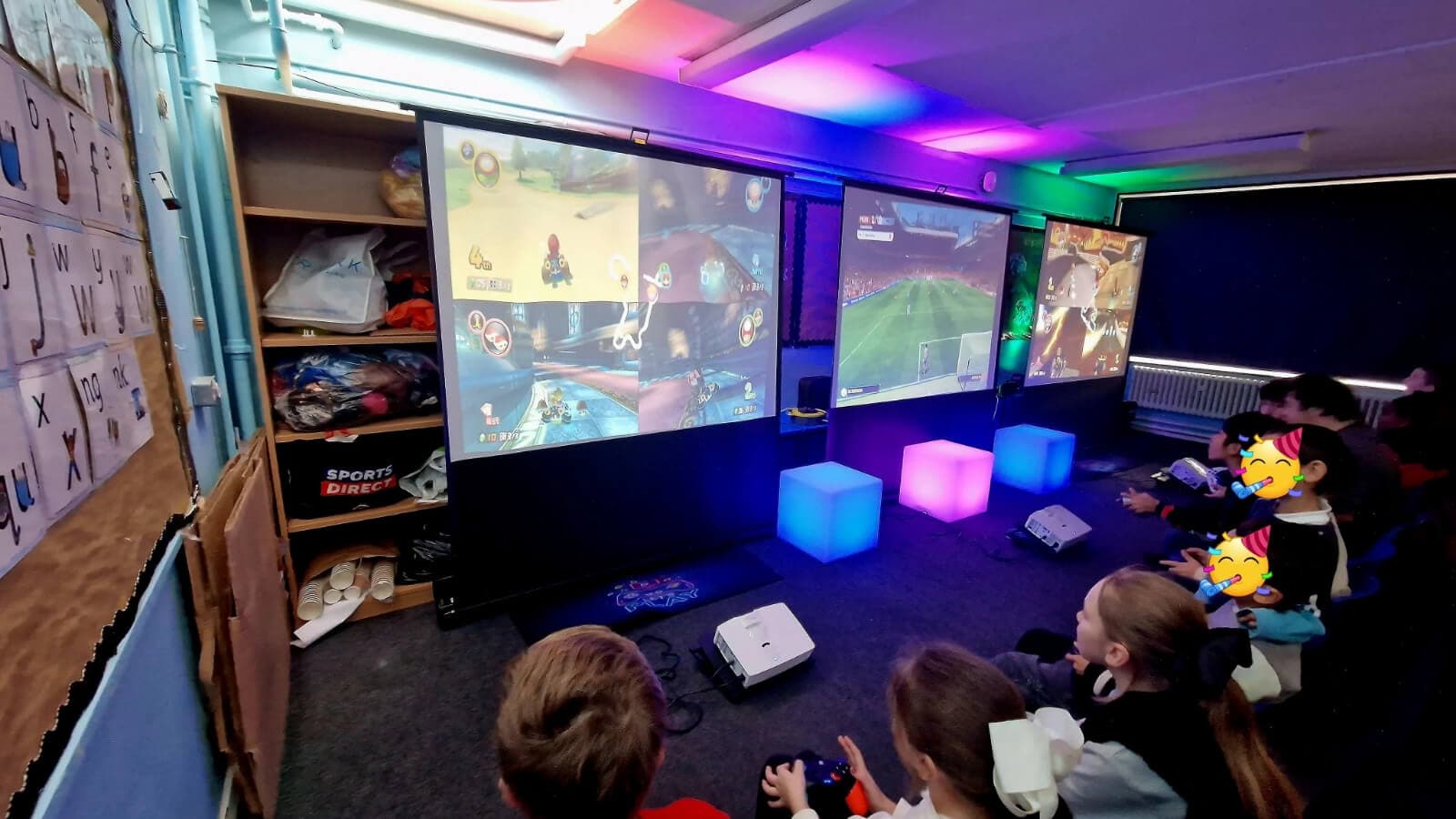
The younger player in a Discord server and the older player standing around an arcade cabinet may be separated by decades of technology.
But both want to know:
Who's here?
What's happening?
What are we playing?
Who's good at this?
What did I miss?
Where do I belong?
What are we doing next?
The opportunity isn't to force younger gamers back into the structures older players remember.
Nor is it to force older players into whatever happens to be culturally dominant among younger players.
The opportunity is to recognize the underlying architecture shared by both.
A platform can bridge those generations because the platform doesn't have to dictate how culture looks.
It has to provide the infrastructure that allows culture to form.
VI.
Console-Native Architecture
This is why my architectural instincts are console-native.
That doesn't mean I believe everything should resemble an old console.
And it isn't nostalgia.
My ecosystem thinking comes from watching several generations of gaming architecture evolve: from arcade immediacy, to console accessibility, to persistent identity, to networked multiplayer, to cultural platforms.
That history teaches a different way of thinking about a gaming platform.
A launcher asks:
What do you want to play?
A console-native ecosystem should also ask:
Who are you here?
Who is here with you?
What's happening?
What matters to your community?
What have you accomplished?
What have you discovered?
What do people know you for?
What will still be here tomorrow?
These are not PC problems or console problems in the literal hardware sense.
They are platform problems.
But console history provides an unusually useful architectural lineage for solving them because consoles spent decades learning how to remove friction between the player and the experience.
Put the game in.
Press start.
Choose your profile.
Invite your friend.
Play.
That philosophy of frictionless participation should not stop at launching the software.
It can extend into culture.
VII.
The Platform as a Place
This is the thinking behind Xbox Forever.
Crawl is console discovery.
Arena is console competition.
Live is console culture.
Identity is console persistence.
Marketplace is a console creator economy.
Dashboard Mode is console-native interaction.
Individually, those systems solve different problems.
Architecturally, they are trying to accomplish the same thing:
Make the platform a place again.
Not by recreating an arcade.
Not by copying Discord.
Not by building another social network.
And not by covering the dashboard with more content.
The objective is to return cultural functions to the platform layer.
A player should be able to arrive and understand that something is happening.
Identity should accumulate meaning over time.
Discovery should emerge from people and culture as well as algorithms.
Competition should produce reputation.
Communities should produce rituals.
Creators should have ways to contribute to the ecosystem around games rather than existing entirely outside it.
And the platform should remember.
This is where I believe Xbox's opportunity is larger than another hardware generation or another dashboard redesign.
Xbox does not simply need more features.
It needs architectural mechanisms that make being inside Xbox culturally meaningful.
That requires identity engines, cultural surfaces, progression anchors, discovery systems, social architecture, and frictionless onboarding that operate across the ecosystem rather than disappearing every time a player launches a different game.
It requires thinking of the platform as more than the thing between the player and the executable.
The platform is the place where the player's gaming life accumulates.
VIII.
What Comes Next
Gaming has spent decades converging technologically.
PC and console increasingly share games, controllers, storefronts, multiplayer networks, subscriptions, achievements, social systems, cross-play, cloud infrastructure, and even interface conventions.
Hardware boundaries matter less than they once did.
But cultural architecture may matter more.
Because when every platform can run the same game, technical access alone becomes less capable of defining why a player belongs somewhere.
Culture can.
Identity can.
Community can.
History can.
Shared experience can.
The next generation of gaming platforms therefore doesn't need to choose between the arcade generation and the Discord generation.
Those generations are closer than they appear.
One gathered around cabinets.
The other gathers around servers.
Both discovered that games become more meaningful when surrounded by people, identity, competition, ritual, discovery, and shared memory.
Players already understand this.
Younger players are demonstrating it by reconstructing gaming culture with whatever tools they can find.
The architecture simply hasn't caught up with them.
Perhaps the future of gaming isn't about inventing an entirely new way to play.
Perhaps it begins by understanding what gaming has been trying to become all along.
Not simply software.
Not simply content.
Not simply a service.
A place.