The Lost Community
Why gaming needs its store culture back — and why discovery collapsed when it disappeared.
I. Why Gaming Needs Its Store Culture Back
I grew up in an era where gaming wasn’t just something you did — it was somewhere you went. Before digital storefronts, before algorithmic recommendations, before endless libraries of titles you scroll past without feeling anything, gaming had physical community hubs. Game stores, book stores, comic shops, music stores — places where culture formed, taste spread, and discovery happened in real time, between real people.
If you wanted to know what was good, you didn’t check a feed.
You talked to someone.
You asked the clerk who knew your taste.
You asked the friend who hung out in the strategy section.
You asked the person flipping through the new releases wall.
You asked the guy who always had a stack of magazines under his arm.
These stores weren’t just retail spaces.
They were cultural engines.
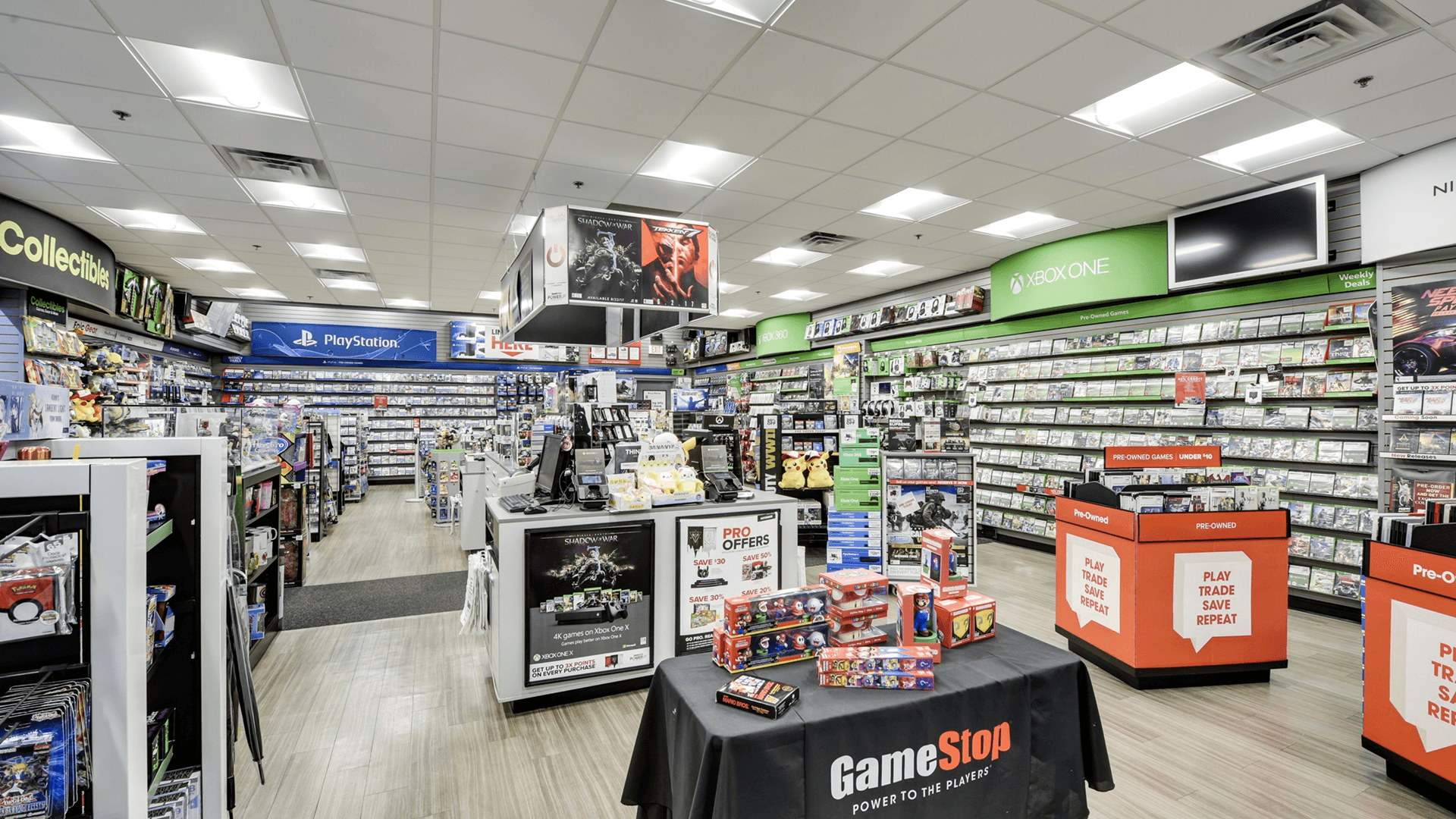
Browsing wasn’t just a transaction. Browsing was a cultural act.
II. Three Ecosystems, One Lesson
During my late teens and early twenties, I worked across three different entertainment ecosystems at the same time — MusicLand (before and after it became Sam Goody), Software Etc (before and after it became Game Stop), and a five‑screen movie theatre where I ran the projectors. All three were in the same mall, and I spent years moving between them.
Before I worked there, I was one of the regulars — one of the people trying to find the next game, album, or movie. Checking release dates. Asking if the store could special‑order a delisted or overseas title. Browsing until something unexpected caught my eye.
MusicLand had identity.
Software Etc had identity.
Even the mall itself had identity.
Every store had its own vibe, its own staff picks, its own regulars, its own micro‑communities. You could walk into a store and immediately understand what kind of culture lived there — what genres mattered, what conversations were happening, what people were excited about.
Browsing wasn’t just a transaction.
Browsing was a cultural act.
You discovered things you didn’t know you were looking for.
You overheard conversations that changed what you bought.
You saw someone pick up a game you’d never noticed.
You found something because someone else found something.
Discovery was social.
Taste was social.
Community was social.
III. And Then Digital Storefronts Arrived
And then digital storefronts arrived — and all of it vanished.
The walls disappeared.
The aisles disappeared.
The staff picks disappeared.
The conversations disappeared.
The culture disappeared.
Everything flattened into a single feed.
Everything alphabetized.
Everything undifferentiated.
Everything optimized for transactions instead of identity.
The modern gaming marketplace doesn’t feel like a place.
It feels like a database.
And databases don’t create culture.
People do.
IV. Behavior Is Not Identity
The loss of physical community didn’t just change how we buy games — it changed how we relate to them. When stores disappeared, discovery collapsed. Not because players changed, but because the infrastructure that made discovery meaningful was removed. The industry replaced human curation with algorithmic sorting and assumed the results would be the same.
They weren’t.
Algorithms don’t know your taste.
They know your behavior.
And behavior is not identity.
Behavior is not community.
Behavior is not culture.
The old stores weren’t perfect, but they did something digital storefronts never learned how to do: they created a shared space where taste could spread. They made discovery feel like exploration. They made browsing feel like belonging. They made gaming feel like a culture instead of a catalog.
V. More Content Than Ever, Less Discovery Than Ever
Today, gaming has more content than ever, but less discovery than ever. More players than ever, but fewer communities than ever. More ways to buy games, but fewer ways to find the ones that matter.
When I worked at MusicLand, the layout itself taught you how the industry worked. Every wall was organized by genre — rock, hip‑hop, jazz, metal, punk, electronic — and each genre had its own identity, its own labels, its own culture. We had a staff‑picks section where each employee curated their corner of the wall. Customers knew exactly who to talk to when they wanted their next fix: the metal expert, the hip‑hop expert, the indie expert.
The store had identity.
The labels had identity.
The genres had identity.
And the customers had a map.
VI. The Hardware Wall Problem
At Software Etc, the layout was completely different. The walls weren’t organized by genre or tone or audience — they were organized by hardware.
PC on one wall.
Nintendo on another.
Xbox on this wall.
PlayStation on that wall.
Everything alphabetized inside each section.
No identity.
No segmentation.
No curation.
And when digital storefronts arrived, nothing changed.
The same structure carried forward: everything alphabetized, everything flattened, everything undifferentiated. Even though we could recommend games, the store itself — physical or digital — had no structure.
That contrast stayed with me.
It’s the same contrast the game industry still struggles with today.
VII. The Shelves Didn’t Just Change — They Disappeared
The shelves didn’t just change.
They disappeared.
And that disappearance created a vacuum — a missing layer in gaming’s cultural infrastructure. A layer that once connected players to each other, connected players to games, and connected games to culture.
A modern gaming marketplace could recreate that layer.
Not as a storefront.
As a community engine.
A place where identity lives.
A place where taste spreads.
A place where discovery feels human again.
This idea didn’t stay theoretical for me. It became one of the foundations of Xbox Forever — a platform architecture built around restoring the connective layers between players, games, identity, discovery, and culture. You can find the one-pager under Projects.